GPT精密
精密制造



车床零件的表面处理 (车制零件)
12 月 23, 2016
车床零件的表面处理 (车制零件)
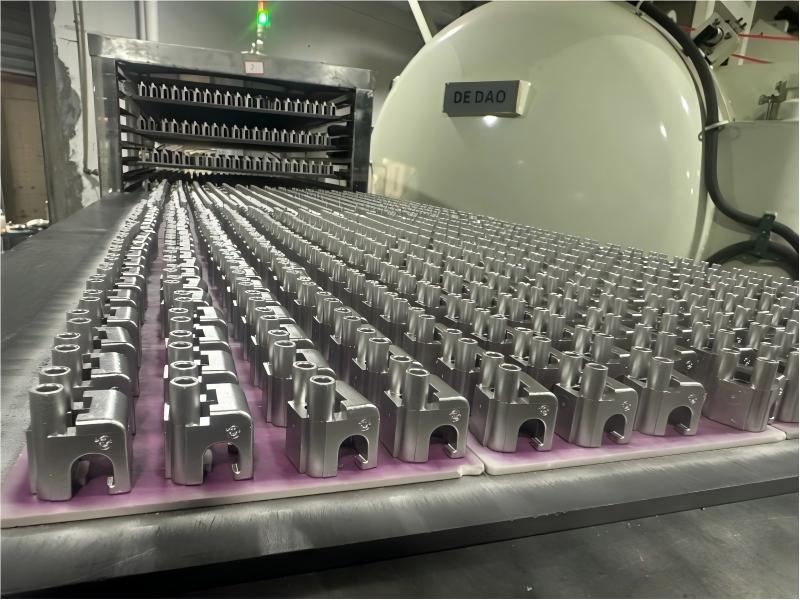
1. 什么是表面处理?
表面处理—也称为表面精加工—是一个广泛的工业过程类别,用于改变制造零件的表面. 其目标是实现特定的物理, 化学, 或美学特性, 例如提高耐腐蚀性, 增强耐磨性, 减少摩擦, 或实现期望的视觉外观.
Almost all machining operations, including CNC turning, inherently leave a distinct surface texture or "machining marks" on the workpiece. While standard turning processes are highly optimized to ensure the initial finish meets basic functional requirements, they are often insufficient for high-precision or cosmetic applications. In these cases, secondary surface finishing processes are introduced.
Depending on the engineering requirements, these post-processing methods may include:
- Abrasive & Mechanical Finishing: Grinding, polishing, lapping, honing, and abrasive blasting (sandblasting).
- Thermal & Electrical Finishing: Electrical Discharge Machining (EDM) and laser texturing.
- Chemical Finishing: Chemical milling, industrial etching, and lithography.
2. Sandblasting: A Practical Post-Processing Solution
Sandblasting (often referred to more accurately as bead blasting when using glass media) is one of the most effective mechanical surface treatments for turned components. It is primarily used to eliminate visible tool marks left by the lathe cutter, leaving a perfectly uniform matte or satin finish.
How the Sandblasting Process Works
During the sandblasting process, a pressurized air gun forces fine abrasive media at high velocity against the surface of the machined part. As millions of microscopic particles strike the metal, they peen the surface, microscopic flattening the peaks and valleys left by the lathe tool.
The final texture can be precisely controlled by adjusting three key variables:
- 1)Media Type: Glass beads produce a smooth satin finish; aluminum oxide creates a rougher, non-reflective matte texture; steel shot is used for heavy-duty cleaning and strengthening.
- 2)Air Pressure: Higher PSI (pounds per square inch) increases the impact force, leading to a deeper texture.
- 3)Nozzle Distance and Angle: Controls the concentration and uniformity of the abrasive spray.
Key Advantages of Sandblasting Turned Parts
- Flawless Cosmetics: It completely masks directional circular lines or spiral tool marks typical of lathe operations.
- Excellent Pre-Treatment: The textured surface increases the surface area, providing an ideal "anchor pattern" for subsequent coatings like anodizing, powder coating, or painting to adhere to.
- Stress Relief: The impact of the blasting media introduces compressive residual stresses on the part’s surface, which can slightly improve fatigue resistance.
3. Other Common Surface Treatments for Lathe Parts
While sandblasting is excellent for texture, other applications require different chemical or electrochemical properties. The table below outlines the most prevalent finishes paired with turned components:
| Process | Primary Purpose | Best Matched Materials |
|---|---|---|
| 阳极氧化 (Type II / Type III) | Corrosion & wear resistance, color dyeing | Aluminum Alloys |
| Electropolishing | Ultra-smooth, mirror-like finish; cleanability | Stainless Steel |
| Passivation | Removes surface iron to maximize rust prevention | Stainless Steel |
| Black Oxide | Sleek black appearance, mild corrosion protection | Carbon Steel, Copper |
| Electroplating (Zinc/Nickel) | Enhanced conductivity, wear resistance, aesthetics | Steel, Brass, Copper |
Manufacturing Note: When designing lathe parts that require post-machining surface treatment (especially thick coatings like heavy anodizing or electroplating), engineers must factor in the plating thickness during the machining stage to ensure final dimensional tolerances are met.
也许你也喜欢
 您是否正在参加灌溉协会的灌溉展?
服务
