Traitement de surface des pièces tournées (Composants tournés)
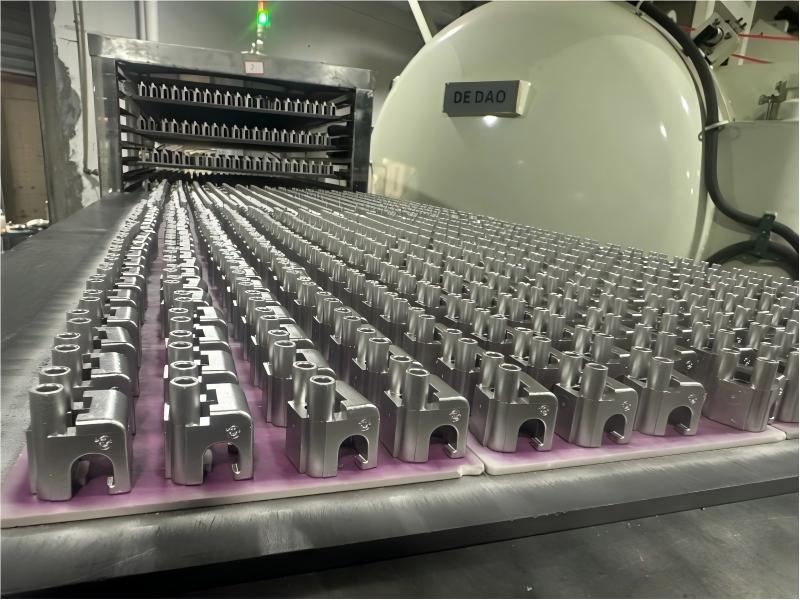
1. Qu'est-ce que le traitement de surface?
Le traitement de surface—également connu sous le nom de finition de surface—est une vaste catégorie de procédés industriels modifiés pour modifier la surface d'une pièce fabriquée. L'objectif est d'obtenir des propriétés physiques, chimiques, ou esthétiques spécifiques, comme améliorer la résistance à la corrosion, renforcer la résistance à l'usure, réduire la friction, ou obtenir un aspect visuel désiré.
Presque toutes les opérations d'usinage, y compris le tournage CNC, laissent intrinsèquement une texture de surface distincte ou "des marques d'usinage" sur la pièce. Alors que les processus de tournage standard sont fortement optimisés pour garantir que la finition initiale répond aux exigences fonctionnelles de base, ils sont souvent insuffisants pour les applications de haute précision ou esthétiques. Dans ces cas, secondary surface finishing processes are introduced.
Depending on the engineering requirements, these post-processing methods may include:
- Abrasive & Mechanical Finishing: Grinding, polishing, lapping, honing, and abrasive blasting (sandblasting).
- Thermal & Electrical Finishing: Electrical Discharge Machining (EDM) and laser texturing.
- Chemical Finishing: Chemical milling, industrial etching, and lithography.
2. Sandblasting: A Practical Post-Processing Solution
Sandblasting (often referred to more accurately as bead blasting when using glass media) is one of the most effective mechanical surface treatments for turned components. It is primarily used to eliminate visible tool marks left by the lathe cutter, leaving a perfectly uniform matte or satin finish.
How the Sandblasting Process Works
During the sandblasting process, un pistolet à air comprimé projette des abrasifs fins à grande vitesse contre la surface de la pièce usinée. Alors que des millions de particules microscopiques frappent le métal, elles martèlent la surface, aplatissant microscopiquement les crêtes et les vallées laissées par l'outil du tour.
La texture finale peut être contrôlée avec précision en ajustant trois variables clés:
- 1)Type de média: Les billes de verre produisent une finition satinée et lisse; l'oxyde d'aluminium crée une texture plus rugueuse, mate et non réfléchissante; les billes d'acier sont utilisées pour le nettoyage intensif et le renforcement.
- 2)Pression de l'air: Une PSI plus élevée (livres par pouce carré) augmente la force d'impact, ce qui conduit à une texture plus profonde.
- 3)Distance et angle de la buse: Contrôle la concentration et l'uniformité du jet abrasif.
Principaux avantages du sablage des pièces tournées
- Esthétique impeccable: Il masque complètement les lignes circulaires ou spirales directionnelles typiques des opérations de tournage.
- Excellente pré-traitement: La surface texturée augmente la surface disponible, fournissant un "modèle d'ancrage" idéal pour les revêtements ultérieurs tels que l'anodisation, le revêtement en poudre, ou la peinture pour adhérer.
- Détente des contraintes: L'impact du média de sablage introduit des contraintes résiduelles de compression sur la surface de la pièce, ce qui peut légèrement améliorer la résistance à la fatigue.
3. Autres traitements de surface courants pour les pièces de tour
Bien que le sablage soit excellent pour la texture, d'autres applications nécessitent différentes propriétés chimiques ou électrochimiques. Le tableau ci-dessous présente les finitions les plus répandues associées aux composants tournés:
| Processus | Objectif principal | Matériaux les mieux adaptés |
| Anodisation (Type II / Type III) | Résistance à la corrosion & résistance à l'usure, Teinture de couleur | Alliages d'aluminium |
| Électropolissage | Finition ultra-lisse, miroir; nettoyage | Acier inoxydable |
| Passivation | Enlève le fer de surface pour maximiser la prévention de la rouille | Acier inoxydable |
| Oxyde noir | Apparence noire élégante, protection contre la corrosion légère | Acier au carbone, Cuivre |
| Galvanoplastie (Zinc/Nickel) | Conductivité améliorée, résistance à l'usure, esthétique | Acier, Laiton, Cuivre |
Note de fabrication: Lors de la conception de pièces de tour nécessitant un traitement de surface après usinage (en particulier des revêtements épais comme l’anodisation lourde ou la galvanoplastie), les ingénieurs doivent tenir compte de l’épaisseur du revêtement lors de l’usinage afin de garantir que les tolérances dimensionnelles finales sont respectées.



 Assistez-vous au salon de l’irrigation de l’Association de l’irrigation?