GPT Precision
Fabrication de précision



- Appelez-nous au
0755-23089686 - Envoyez-nous un e-mail
sales@precisiontoolingchina.com - WhatsApp
13530516428
How to Choose a CNC Machining Material for Your Part
October 6, 2026
A useful CNC material choice starts with the part’s job. A bracket that holds alignment, a shaft exposed to cleaning chemicals, and a sliding guide each create a different set of priorities. Start by defining those priorities before comparing material prices.
The aim is to select a specific grade and condition that meets the design requirements and can be manufactured, inspected, and supplied consistently. The following sequence helps purchasing and engineering teams narrow the options and prepare a more useful request for quotation.
Define what the part must withstand
Write down the loads, contact conditions, operating temperature, and expected service life. Include whether loading is steady, repeated, or occasional. A part that holds a static load can behave differently from one exposed to repeated vibration or sliding contact.
Separate strength from stiffness. Strength concerns resistance to yielding or failure; stiffness concerns how much a component deflects under load. Selecting a higher-strength grade does not automatically solve a deflection problem. Geometry and elastic modulus also need attention. If alignment matters, state the permissible movement at the relevant feature rather than simply requesting a “strong material.”
For a polymer component under sustained load, consider creep: deformation can increase over time. Short-term tensile data alone cannot establish long-term performance. Ask the designer to assess the actual stress, temperature, and duration.
Describe the operating environment
Identify contact with water, salts, oils, cleaning agents, or other chemicals, including concentration and temperature when known. “Outdoor use” or “chemical resistant” leaves too much undefined. Also consider contact with dissimilar metals and whether the assembly can trap moisture.
For example, 316 stainless steel generally offers better resistance to localized corrosion in chloride-containing environments than 304, but neither grade is immune in every condition. Grade selection still depends on the exposure and design. A material name cannot replace an application review.
For plastics, check moisture absorption and thermal expansion where dimensions are sensitive. A part measured immediately after machining may encounter different humidity and temperature in service. Define any conditioning and measurement requirements with the supplier.
Specify the grade and material condition
“Aluminum” or “stainless steel” is too broad for a production drawing. Identify the alloy or grade, applicable material specification, and temper or heat-treatment condition where relevant. These details affect the properties of the supplied stock and how the part is processed.
Aluminum 6061 illustrates why the condition matters. Its mechanical properties differ by temper, so an alloy designation without a condition can leave a significant gap. Product form and thickness can also affect the applicable property requirements. Confirm the stock specification rather than copying a single value from a general comparison chart.
If material certificates or heat-lot traceability are required, include them in the RFQ. Any proposed equivalent should be reviewed and approved by the responsible design team before substitution.
Check geometry and finishing together
Give the supplier the actual geometry and critical dimensions when reviewing materials. Thin walls, deep pockets, small holes, and slender features affect workholding, tool access, and the risk of movement during machining. A material that looks economical on a price list may require more demanding processing for that shape.
Machinability depends on the specific material and condition. Cutting forces, chip behavior, heat generation, and tool wear can change the machining approach. Avoid applying a single “easy to machine” label to an entire material family.
Include the intended surface treatment at this stage. Coating compatibility and dimensional changes can influence the material and machining plan. State which dimensions apply after finishing and identify surfaces that must remain uncoated. Review project-specific inspection requirements alongside the drawing.
Compare the cost of an accepted part
Compare quotations on the same basis: stock, machining, heat treatment, finishing, inspection, documentation, and packaging. Check whether the required stock size and condition are readily available. A less common grade or oversized blank may affect both cost and procurement time.
Ask for alternatives only where the design permits them. For each candidate, record the requirement it satisfies, the tradeoff it introduces, and what still needs testing. Keep unverified options clearly separate from the released specification.
For an early prototype, a readily available substitute may help test geometry. Record what that prototype can validate. It cannot automatically confirm the strength, wear behavior, corrosion resistance, or thermal performance of a different production material.
Prepare a focused material RFQ
Send GPT Precision your drawing, candidate material grades, quantities, operating conditions, and finish requirements. Identify the requirements already fixed and the choices still open so the quotation can address the right manufacturing scope.
Peut-être que vous aimez aussi
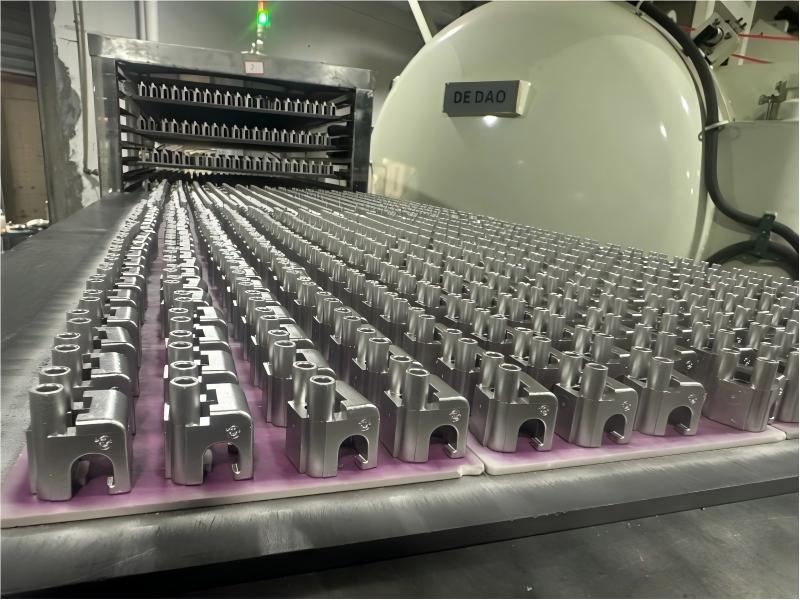 Traitement de surface des pièces tournées (Composants tournés)
 Assistez-vous au salon de l’irrigation de l’Association de l’irrigation?
Service
Temps de travail: 8:30-17:30
